

Do you know how consistently the clinical local area lobbies for everybody to have this season’s virus chance? That is on the grounds that influenza flare-ups as a rule have a season — a season when they start to spread and taint individuals.
Interestingly, there is no extended occasional progress for PC, cell phone, tablet, and endeavor organizations. For their purposes, it’s consistently influenza season. Be that as it may, rather than chills and body hurt, clients can become sick with a kind of machine glitch — malware.
Each sort of malware contamination has its own methods of assault – covertly and subtly up to as unobtrusive as a demo hammer. In any case, in the event that information is power, as a preventive inoculation against disease, we here give a brief network safety seminar on malware, what it is, its side effects, how you get it, and how to manage it, and how to manage it later on. The best site to increase your knowledge is TechKorr.
What is Malware?
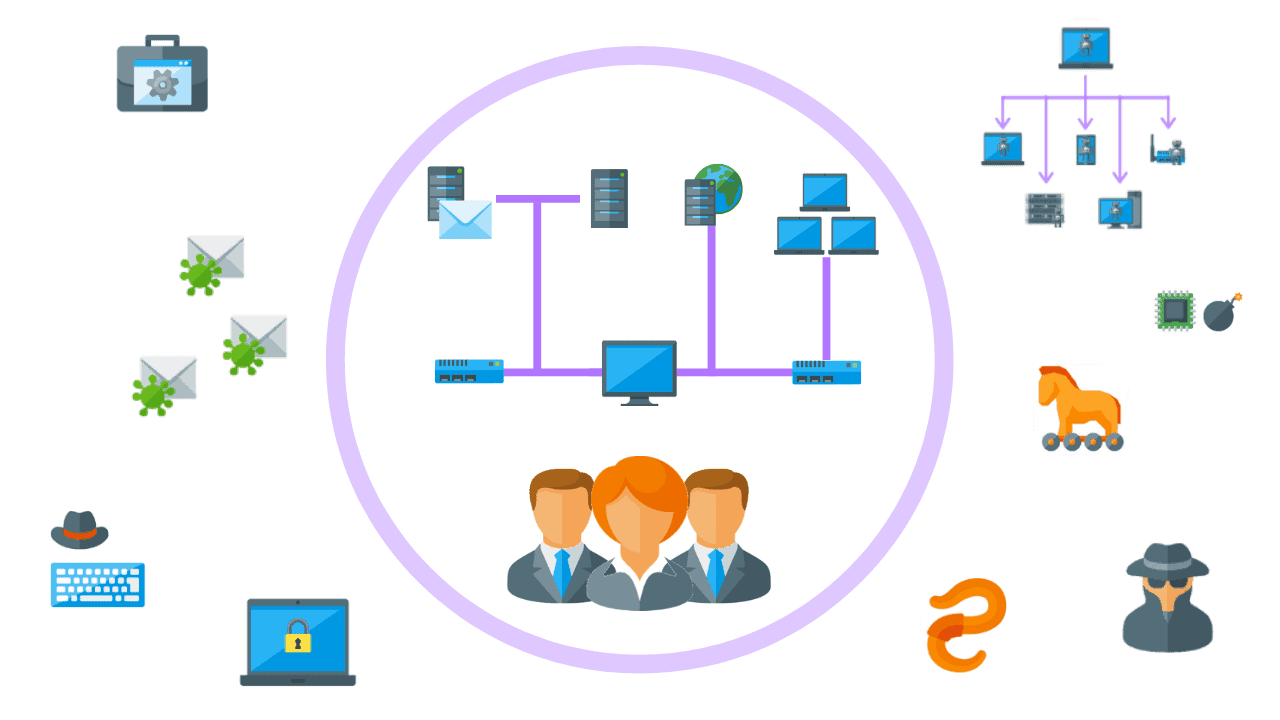
Malware, or “malignant programming”, is an umbrella term that depicts any vindictive program or code that is hurtful to a framework.
Unfriendly, nosy, and purposefully terrible, malware endeavors to assault, harm, or debilitate PCs, PC frameworks, organizations, tablets, and cell phones, frequently assuming in complete command of the activity of the gadget. Like human influenza, it slows down typical working.
The intentions behind malware differ. Malware can be tied in with bringing in cash from you, harm your capacity to work, offer a political expression, or simply be tied in with boasting freedoms. While malware can’t harm the actual equipment of a framework or organization gadget (with one known exemption — see the Google Android segment underneath), it can take, encode, or erase your information, modifying key PC capacities. can seize or capture, and spy on your PC movement. without your insight or authorization. Do you know about Win32: Malware-gen?
How might I let know if I have malware contamination?
Malware can show itself in a wide range of surprising ways of behaving. Here are a few signs that you have malware on your framework:
Your PC dials back
One of the symptoms of malware is to dial back your working framework (OS), so whether you’re exploring the Internet or simply utilizing your neighborhood applications, your framework’s assets seem, by all accounts, to be spending abnormally high. Is. You may likewise see your PC fan turning at maximum speed – a decent pointer that something behind the scenes is taking up framework assets. This happens when your PC is associated with a botnet; for example an organization of slave PCs that complete DDoS assaults, impact spam, or mine digital money.
Your screen is brimming with irritating advertisements
Startling spring-up advertisements are an ordinary indication of malware disease. They are regularly connected with a type of malware called adware. Also, pop-ups as a rule accompany other stowed away malware dangers. So assuming you see something like “Congrats, you’ve won a free mystic perusing!” In the spring up, don’t tap on it. Anything free award the promotion vows to give, it will cost you truly.
Your framework crashes
This can come as a freeze or a BSOD (Blue Screen of Death), the last option happening in the wake of experiencing a deadly blunder on a Windows framework.
You notice a strange loss of circle space
This can be brought about by a swelled malware vagrant, concealed in your hard drive also known as bundleware.
There is an odd expansion in your framework’s web movement
Take Trojan for instance. When a Trojan terrains on an objective PC, the following thing it does is optional contamination, frequently getting to the aggressor’s order and control servers (C&Cs) to download the ransomware. This might make sense of the spike in Internet action. The equivalent goes for botnets, spyware, and whatever other dangers that require correspondence with C&C servers.
Your program settings change
Assuming you notice that your landing page has changed or you have new toolbars, expansions or modules introduced, you might have some sort of malware disease. Reasons change, however it normally implies that you tapped on the “Congrats” spring up that downloaded some undesirable programming.
How would I get malware?
The two most familiar ways malware gets to your framework are through the Internet and email. So fundamentally, at whatever point you associate on the web, you are powerless.
Malware can enter your PC when (take a full breath now) you surf through hacked sites, visit a real website showing pernicious promotions, download tainted records, programs, or applications from new offers. Introduce, open a noxious email connection (malspam), or essentially all the other things you download from the web to a gadget that needs quality enemy of malware security applications.
Malignant applications can stow away in apparently authentic applications, particularly when they’re on sites or sites instead of on official application stores.