


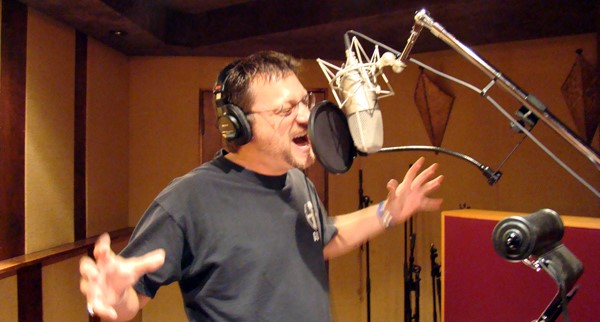
One of the largest and fastest-growing sectors of the global voice acting industry is video game voice over.
Video games are an integral aspect of contemporary culture. The amount of gamers worldwide is expected to surpass 2.7 billion gamers by 2021, and by the year 2025, the global gaming market is predicted to be valued at over $250 billion. Gone are the days when playing video games was an activity you had to be a ‘gamer’ to partake in. By some measure, gaming is now a key component of most of our everyday lives, and we are all gamers nowadays.
The scale of video game production values and audience reach has evolved over the past few decades. Today, the most popular video games are franchises unto themselves, with production budgets, crew sizes, and global audience bases to rival the biggest Hollywood blockbusters. Storylines in today’s video games are far more epic and intricate than they ever used to be, and it isn’t rare for a game to feature a cast of hundreds of different characters.
With the massive increase in both the range of games being produced and the number of new characters being created, gaming developers are increasingly in search of a diversity of voice actors who can perform an assortment of roles. The ability to source a variety of competent voice actors for your project can make or break an otherwise excellent game. It is essential for game creators to have access to a vast pool of talent to bring their characters, stories, and worlds to life.
Types of Video Game Voice Over
There are two main categories of video game voice over roles that game developers are regularly in search of: video game voice actors and video game narrators.
Role-playing games often feature thousands of lines of dialogue, requiring voice actors who can provide animated, dynamic deliveries even when they’ve spent all day in the studio. Reactions must sound spontaneous, and the actor must be able to bring surprise and excitement to the material.
Video game voice actors are routinely asked to record the same phrases, just with a different tone or attitude, so that the player’s experience is varied and unpredictable, especially when that line or action will be heard repeatedly throughout the gameplay.
Characters in video games are no longer like mascots with only one catchphrase, mood, or character trait. As the industry develops increasingly complex narratives, video game voice actors must bring the same sense of depth and range to a character that one might traditionally find in a film or audiobook.
Narrators are another major role portrayed by voice actors in the gaming field. Games of all types need narrators to instruct beginner players about the rules of gameplay and inform more advanced gamers of their progress.
Beyond conversing with other players within a game, video game voice actors will be better at their craft if they can make a variety of sounds and voices. It takes a particular kind of voice actor to suspend an audience’s disbelief.
What Skills Do Video Game Voiceover Artists Need?
Voice over work shares some characteristics with on-camera performance, but some skills don’t transfer as easily between the two forms of media.
Cold Reading
One key difference between conventional acting and voice over is that voice actors may not have many interactions with the script before recording.
Cold reading, or performing a script while reading it for the first time, is a critical skill that many voice actors develop early in their careers.
In some cases, voice actors may be presented with lines out of order or out of their natural relation to other lines from the scene.
Talented voice artists can quickly read through a script, get into character, and deliver an outstanding performance.
Physical and Mental Fitness
The human voice is surprisingly frail, particularly for professional voice actors who make a living through their distinctive vocal styles.
To stay in peak condition, voiceover artists need to warm up before sessions, avoid strenuous sounds like screams and whispers, and make sure to get enough rest both between takes and between acting jobs. They should do some voice acting exercises daily.
Just like conventional actors, voice actors can also have trouble performing if they’re dealing with stress or other mental or emotional challenges.
Self-care is critical for delivering strong performances under pressure and maintaining a good work-life balance, particularly during the COVID-19 pandemic.
It’s important to avoid underestimating the role of mental health in professional performance, both in voice acting and in other fields.
Consistency
Even in a normal voice over setting, actors who are more familiar with live-action roles need to adjust to the experience of reading dramatic lines in a studio.
This could include recording the same line or set of lines over and over in order to get a good take, and many recording sessions take place individually.
The perfect voice actor would sound just as convincing on the 100th take as they did on the 1st.
Vocal Range
Vocal talent is critical for all forms of acting, but professional voice talent rely on their vocal skills to animate their characters.
Recording lines for a video game character puts more pressure on the actor’s vocal capabilities, and conventional actors may not be accustomed to building characters through voiceover alone.
Like any other form of acting, video game voice acting requires a unique set of skills that don’t always transfer from other areas.
Voice actors can have trouble transitioning to live-action, and the same is often true in the opposite direction.
Professional voice actors have the tools to deliver engaging voice overs for all kinds of video games.
Technical Skills
Voice actors were once expected to audition in-person in a handful of major cities, but more and more acting jobs are being posted and filled online.
While online auditions requires the same vocal skills as in-person tryouts, recording in a home studio introduces some unique challenges.
Professional voice actors need to develop some basic sound editing skills in order to clean up breaths and background noises.They are familiar with some voice over recording software and know how to edit their audio.
Similarly, sound processing techniques like compression, EQ, and dressing are crucial for a well-balanced recording.
A casting director evaluates mostly based on a voiceover artist’s performance but a superior sounding voice recording will always have an advantage over one that is sub-par. Thank you for your reading. Good Luck!