


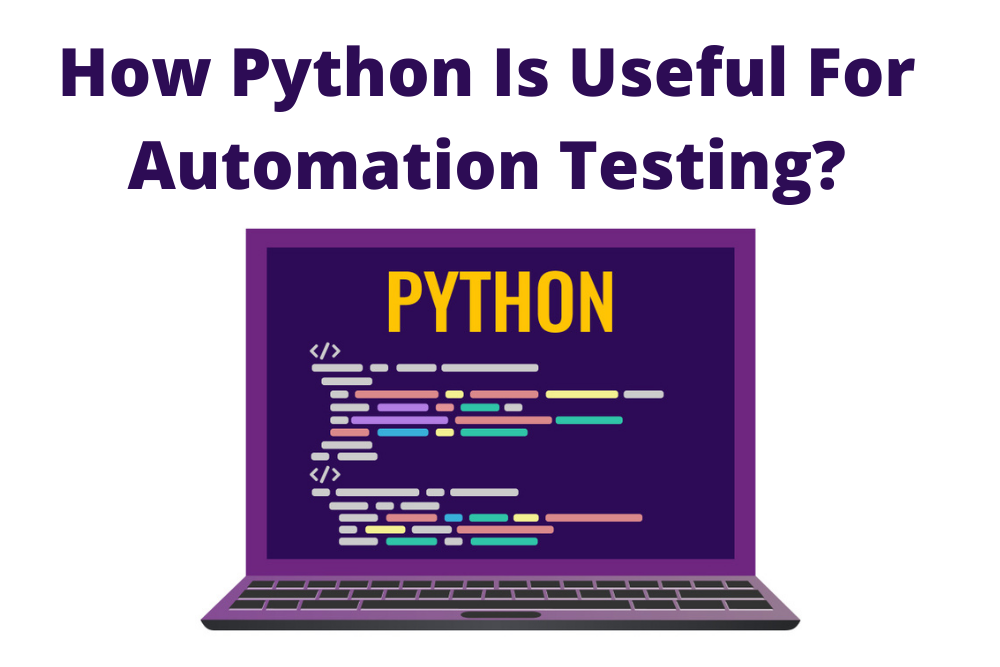
Because python test automation frameworks are written in Python, they bring together modules and packages, allowing us to create applications fast. It allows testers to easily write simple test cases with a keyword-driven test technique.
Python library is an excellent place to start with Python automation. It includes a minimal set of tools for fixtures, test cases, test suites, and a test runner. In test-driven development, a unit test is frequently used.
When it comes to automating test cases, one of the most challenging decisions is choosing on a programming language with good test automation features. Python, Java, C#, Ruby, and other popular programming languages may be utilized with a Selenium test automation framework. Python automated testing, on the other hand, is widely applied by QAs all around the world, particularly with Selenium WebDriver.
Following are the advantages of using Phython for automation testing :
Less Verbose & Easy To Read
Because Python is a scripting language, the automation engineer does not need to use a compiler to turn code into an executable. The Zen of Python, a great book for Python automated testing, says that an easy-to-explain implementation is always a good idea! This simply implies that the tests included in the test case (or test suite) should be legible, informative, and simple to explain.
A Comprehensive List of Python Test Automation Frameworks
PyTest, Behave, Robot, Lettuce, Nose2, and Testify are some of the most popular Python test frameworks. Automated unit, integration, and system testing can be performed using frameworks such as PyTest, Nose2, and Testify.
Robot framework is a popular Python test automation framework for RPA, Selenium testing, and ATDD (Acceptance Test Driven Development). Lettuce and Behave are two Python test frameworks that are ideal for BDD (Behavior Driven Development). These several frameworks may be installed with little effort (through the pip install command) and are very compatible with the Selenium WebDriver.
PyTest – The Most Effective Python Test Automation Framework
PyTest – The Most Effective Python Test Automation Framework
PyTest is ranked first among the finest automation frameworks (available in any language). PyTest, like other Python frameworks, is used for unit testing, integration testing, and end-to-end testing.
Though PyUnit (unit test) is the default Python test framework, developers and automated testers prefer PyTest since it has more features than PyUnit. Tests can be basic functions or can accept input parameters to provide parameterized testing.
PyTest fixtures make it simple to run tests on a variety of web browsers and platform combinations. Parameterized PyTest fixtures may be run with a variety of input values.
‘Parallel Testing’ Made Simple
Parallel testing with Selenium is widely used for doing automated testing across many browser and platform combinations.
The pytest-xdist plugin for the PyTest framework facilitates parallel testing. When tests are not thread-safe and require state separation, this is the preferable choice. Installing the plugin is as simple as typing pip install plugin-name > into the terminal. In the Python environment, pytest-parallel is a plugin that should be used for executing Selenium tests in parallel that are thread-safe and have no state management.
As a result, pytest-xdist performs parallelism, whereas pytest-parallel does concurrency and parallelism. There are options for providing the maximum number of workers (or processes) to start and the maximum number of concurrent tests per worker (i.e. tests-per-worker).
Packages that are simple to install
PIP is Python’s standard package management system. Installing a new package with pip does not necessitate the download of the package. The pip install command searches PyPI for the desired package, checks for its dependencies, and instals the relevant packages to ensure that the install request is delivered without issue.
Though languages such as C# and Java have tools that are comparable (for example, the Package Manager Console in C#), installing packages in Python using pip is a whole different experience!
Programming Language with Multiple Paradigms
Python is a computer language that supports several paradigms. As a result, object-oriented programming and structured programming are fully supported. The bulk of Python’s features allow functional and aspect-oriented programming.
The presence of meta-programming, which allows programmes to regard other programmes as data, meets the objectives of aspect-oriented programming. Because the framework does not compel the inclusion of test functions in classes, the readability and implementation of test functions in Python are improved. Unlike other programming languages, Python allows the test automation engineer to choose whether to utilise classes or functions for Selenium test automation.
A Diverse Set of IDEs
PyCharm (Community Edition) is my favourite IDE for Python test automation since it can be used regardless of the framework that supports Selenium test automation. Only if you use BDD frameworks in Python should you consider upgrading to PyCharm (Professional Edition).
If the Python test automation scenarios are not too complicated, there is the option of using GVim, Notepad++, and Visual Studio Code for rapid editing. When it comes to modifying code, Visual Studio Code is my go-to IDE because it has various plugins that make the work much easier!
Typing on the Go
The Python programming language employs dynamic typing and late binding (or dynamic name resolution), which binds method and variable names during execution. This functionality is quite useful for Python test automation.
Python also has popular static type checkers such as Pyre (a performant type checker for Python 3) and Mypy. Python’s checkers enable you to mix the power of dynamic and static typing. To master Python Skills visit Python Classes In Pune
Powerful and Easy-to-Use Reporting
Reporting is a key aspect in Selenium test automation since it provides better visibility into the automation testing process. Powerful reports that provide the required information in a succinct and intelligible style may be provided to necessary stakeholders (in the team) to keep them informed of the situation.